Acoustic calculation and design.
Acoustic calculation and design of room acoustic design.
- building a 3D model of the room;
- calculation of reverberation time;
- selection of facing and acoustic materials;
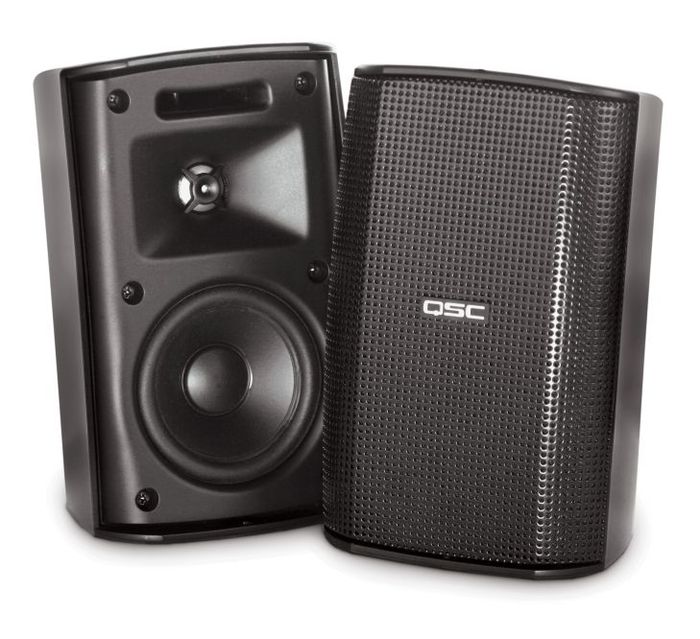
- selection of audio equipment (loudspeakers and amplifiers) and their location
- calculation of sound pressure levels, speech intelligibility and other parameters.
Our company performs acoustic and electro-acoustic calculations in a specialized licensed program EASE 4.4 (Enhanced Acoustic Simulator for Engineers), created by the German company AFMG (Ahnert Feistel Media Group). Our company’s specialists who perform acoustic calculations have a certificate confirming the qualifications of our specialists and permission to work from AFMG. To obtain the certificate, our specialists were trained at the Berlin office of AFMG.
A certificate of acoustic modeling in the EASE program is available on our website, and is also provided in the acoustic calculation report.
What tasks does acoustic calculation perform?
Construction organizations, in order to create a room where improved music reproduction through sound reinforcement is required, need an understanding of how to build the rooms and what cladding materials to use. Also, what audio equipment to choose and how to place this equipment. These issues can be resolved by preliminary acoustic calculations in the EASE program. The report displays the following parameters:
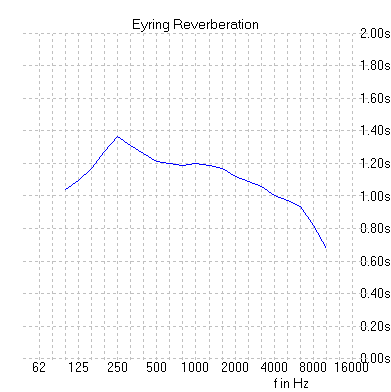
- Reverberation time (RT) – depends on the facing materials of the room; for each volume of the room, certain reverberation time values must be observed; for this, our experts select the necessary material when modeling the hall in the EASE program.
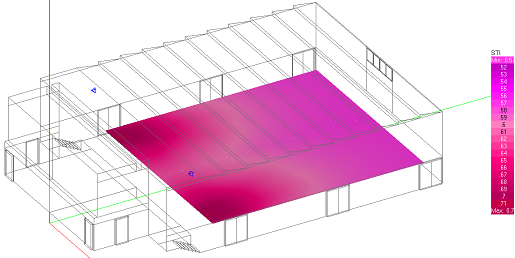
- The intelligibility index (STI) is a coefficient dependent on the reverberation time, the volume of the hall, the selected acoustic systems and their location. The coefficient shows how intelligible the speech and music signal coming from the speaker systems will be. There are several criteria for the intelligibility coefficient.
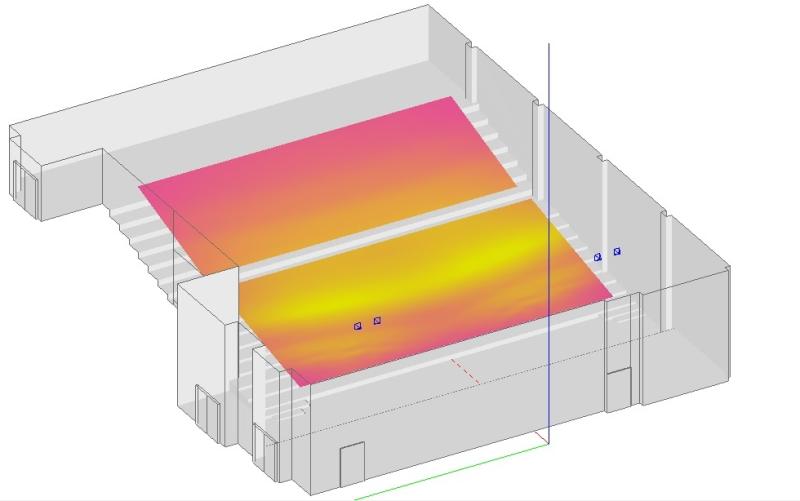
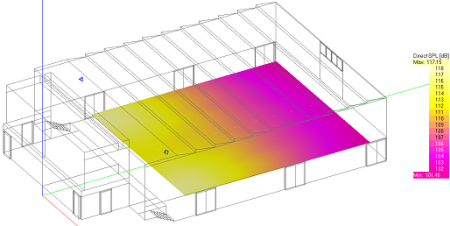
- Sound pressure level (Direct SPL) – on the audience map shows the sound pressure level at each point, without taking into account the reflected signal (from structures, walls, etc.). By this parameter you can judge the volume of the sound system.
- Direct and reflected signal level (Total SPL) – when calculating this parameter, the reflected sound signal is added to the direct sound pressure. Calculated only indoors.
- Articulation Loss - A graphical representation of the percentage loss of consonant articulation, based on STI speech intelligibility.
- Musical clarity coefficient (C80) - determines which format of musical works will be most favorable to the hearing of a person in a given room.
- Above is a standard acoustic calculation report, but we can always provide additional parameters at the customer’s request.
The work we do in acoustic calculations.
- First of all, we analyze all the data on the object that the customer sent us, these are drawings of the premises: plan and section. Drawings should preferably be in AutoCAD format. If necessary, our specialists visit the site and take measurements.
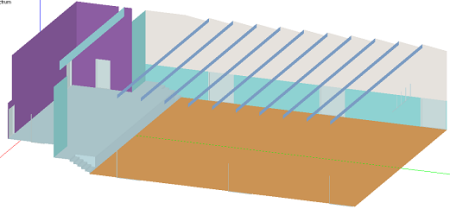
- The second stage is the creation of a 3D model of the room in the EASE program, taking into account all dimensions, layout and heights. In this case, facing materials are taken into account. After building the model, the seats of the spectators are indicated, where the necessary calculations and coefficients will be shown.
- The next stage is to adjust the reverberation time depending on the volume of the room; according to the recommendation, we achieve the required values depending on the volume of the room. We adjust the facing materials and provide our recommendations in the report.
- After editing the characteristics of the room, we place simulators of acoustic systems in the 3D model. At the same time, we select the brand and model of acoustics for the required tasks. Also, for each system we set the direction towards the audience with the necessary angles. We also provide the coordinates of the installed acoustic systems in the report.
- The final stage is calculating the sound parameters of the room. Next, we document all steps of the acoustic calculation in a report.
- Comments