Acoustic calculation using the EASE 4.4 program
|
Оформите заявку на сайте, мы свяжемся с вами в ближайшее время и ответим на все интересующие вопросы.
|
Заказать услугу
|
Acoustic calculations are usually carried out for objects with complex acoustics or increased requirements for sound quality.
Acoustic calculations are usually carried out for objects with complex acoustics or increased requirements for sound quality. The purpose of an acoustic calculation is to obtain an idea of the possible sound quality of an object. At the same time, in the acoustic modeling program, you can try different options for constructing a sound system, options for different room decorations to achieve the necessary characteristics of the natural acoustics of the room, etc.
The first step of acoustic calculation is the development of a room model in the EASE 4.4 modeling program
The model of a room or open space itself can be a set of planes that have specified characteristics of sound absorption and reflection. The assignments of these characteristics are selected either from the EASE program material library (for example, concrete, drywall, glass, carpet, ceilings of various types and others), or data provided by the manufacturers of the materials used. Manufacturers of acoustic materials such as Jocavi are leading in this segment.
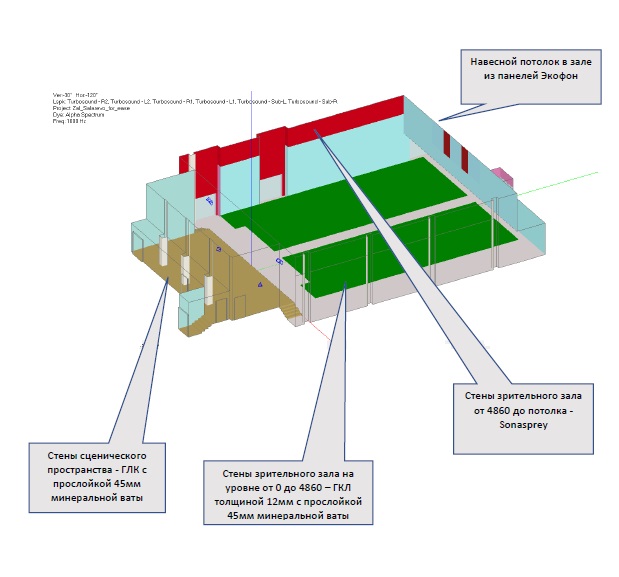
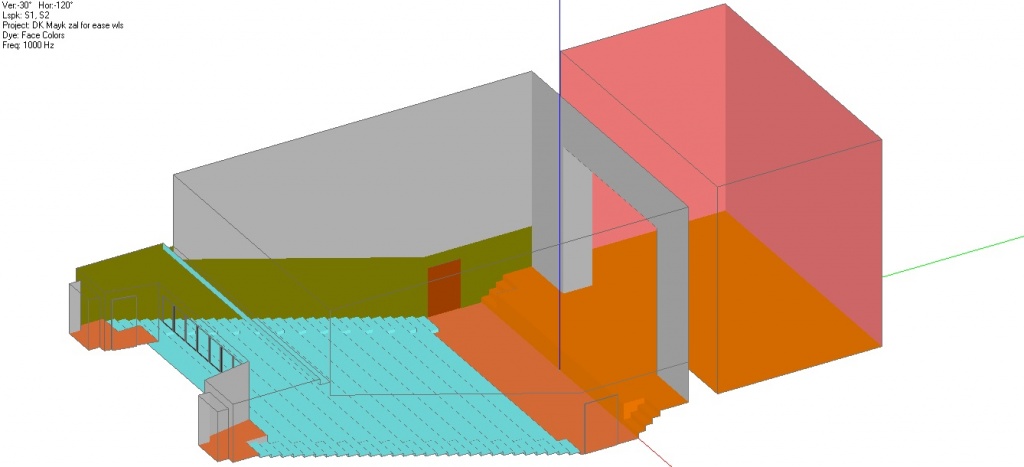
Based on geometric data and characteristics of the planes, the program produces the estimated reverberation time in the room at different frequencies. If the reverberation time schedule does not match, you can always correct it by selecting other finishing materials.
The acoustic model of a room changes when the geometry and properties of materials change.
There is import from convenient graphic editors, which reduces the time for building a three-dimensional model and reduces the number of errors.
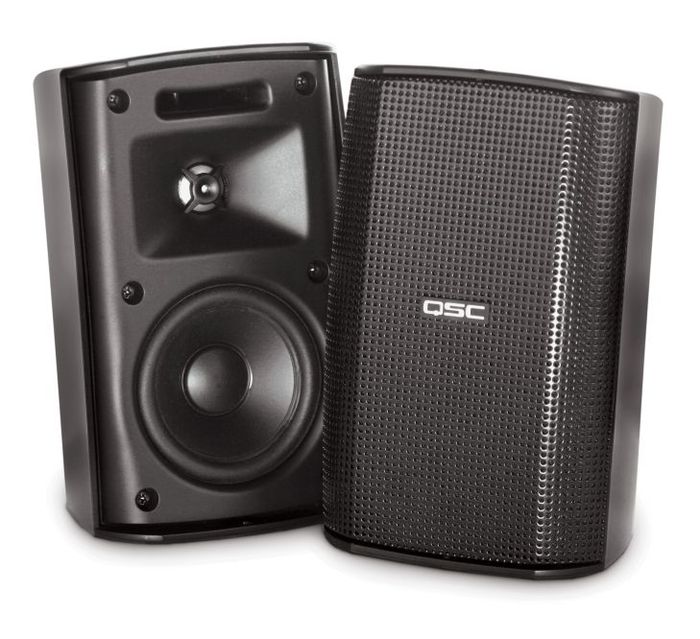
After analyzing the acoustic model of the room, you can proceed to the placement of acoustic systems. The EASE program contains a very large library of acoustic systems from various global manufacturers. The library has a complete catalog of famous brands: Electro-Voice, Dynacord, Turbosound, JBL, QSC, d&b audiotechnik and many others. The database is updated periodically.
More recently, acoustic engineers have come to a consensus on selecting speaker simulator files that convey the most accurate characteristics and propagation of sound energy. The library also has different types of speaker systems, both single and line array systems.
When installing speaker systems in a room, the EASE program allows you to set the directionality and tilt angles to better cover the sound pressure in the listening area. Parameters such as audio signal delay and frequency response are also subject to change.
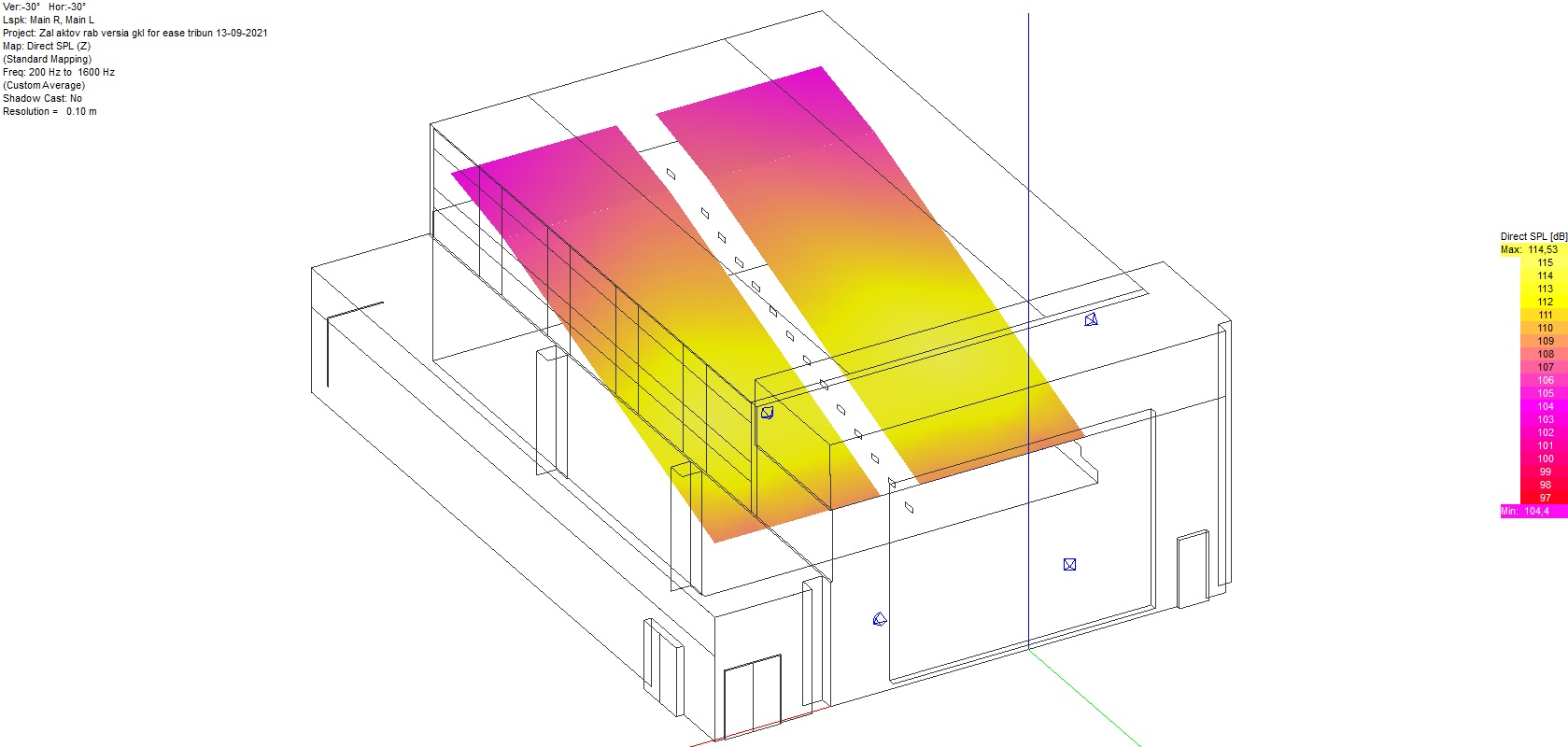
The very first calculation parameter that should be checked is the direct sound pressure level. It can be viewed on different frequency ranges and across a wide full range of reproduced frequencies.
If the direct sound signal is very uneven, you should change the choice or directional angle, or the placement of the speaker systems.
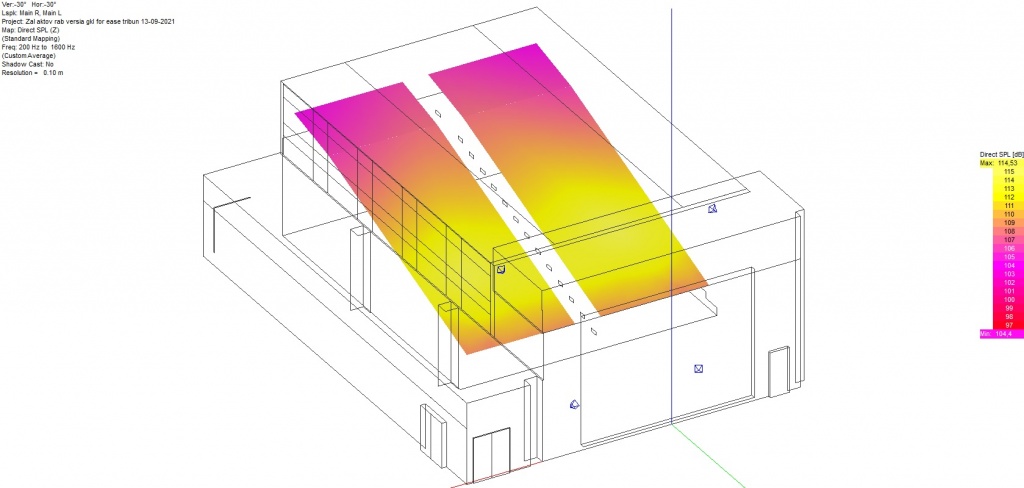
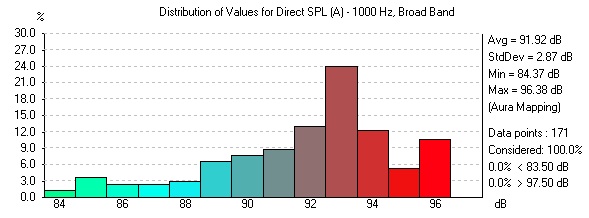
The main indicator of a direct sound signal is at what points in the spectator seats the direct sound level arrives.
The sound pressure assessment is also added by the reflected level, the calculation of which can be obtained in the next step. The parameter for calculating direct and reflected sound pressure gives a general picture of the filling of sound levels in the entire area. Here you need to determine whether a lot of reflected sound is created relative to the direct one. This assessment affects speech intelligibility. At the same time, the assessment allows you to understand what maximum volume level the sound reinforcement system will provide.
Using the reverberation time, architectural data of the room and the properties of the loudspeakers, the program calculates the speech intelligibility factor. Based on the calculated values, it is determined how high-quality and clear the speech of the speaker or artist will be transmitted. The higher the coefficient, the better the speech intelligibility.
When preparing an acoustic calculation, the acoustic engineer provides standard data on the speech intelligibility coefficient in the report. But it should be taken into account that subjectively inflated calculated values cannot be a correct calculation. The acoustic calculation program contains many nuances when working in it.
Also, to evaluate the performance of the sound system, other calculated parameters of the EASE 4.4 program are used, for example, the ratio of direct to reflected sound, the index of clarity and clarity of sound.
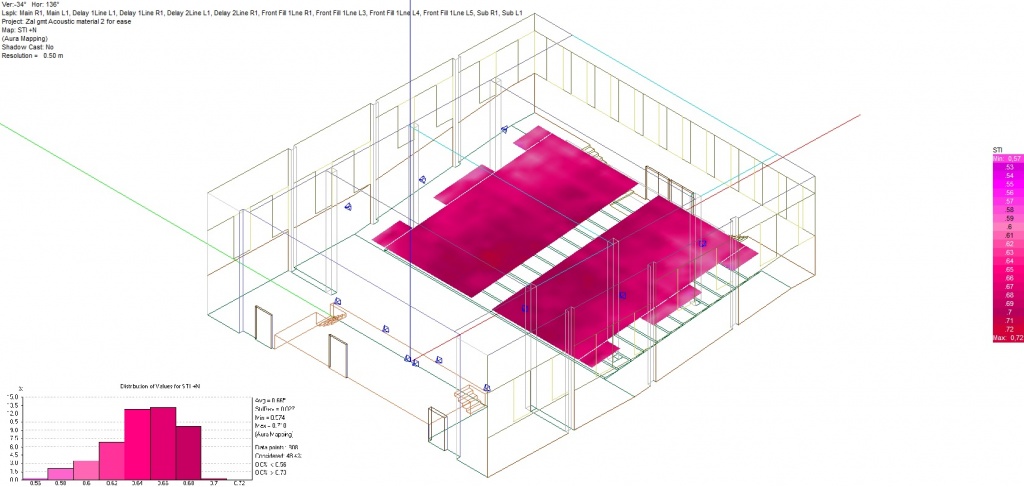
Based on the acoustic calculation values, the selected architecture, room cladding and loudspeaker system can be approved.
The next steps to create a comfortable sound system in a room are to make changes to architectural and planning solutions based on the selected materials, and based on the choice of acoustic systems to create a sound reinforcement system project with the choice of additional sound equipment.