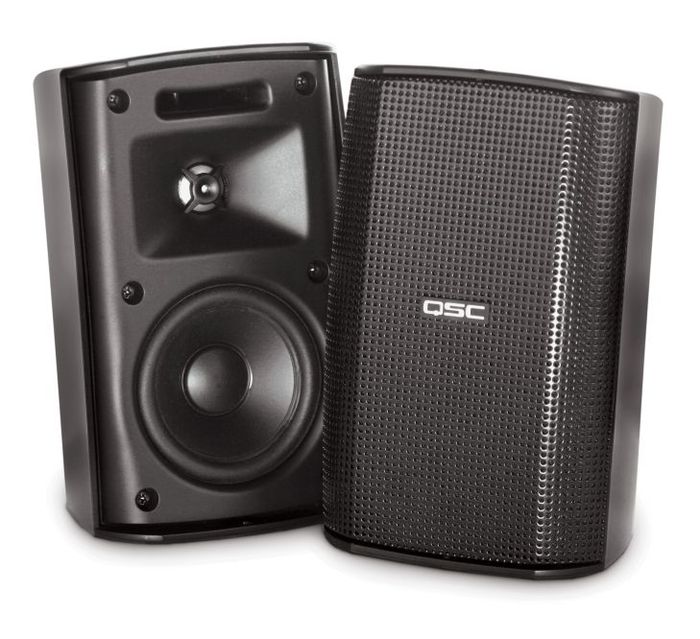
Construction of a theater sound reinforcement system (theater sound reinforcement system)
The theater always changes productions and changes the repertoire of performances, which leads to changes in technical tasks. The production is edited, including within the technical capabilities of the stage complex, sound reinforcement system and stage lighting.
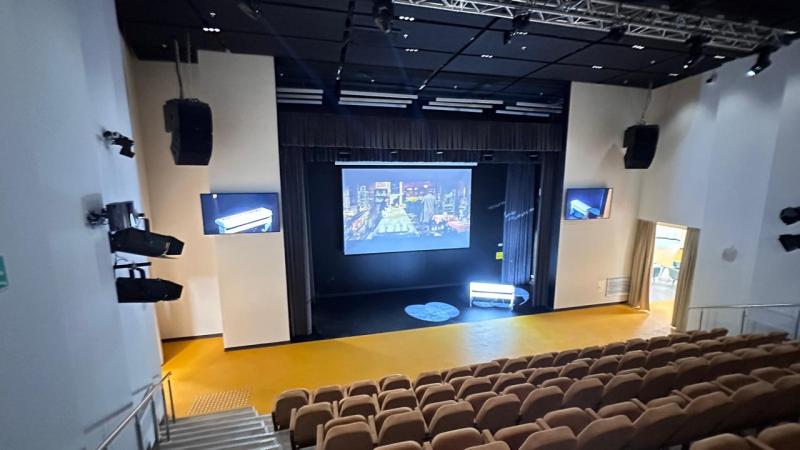
Almost every theater hall has a sound reinforcement system, which consists of a microphone park, a sound engineer's console (sound mixing console), speaker systems, a switching system...
The theater always changes productions and changes the repertoire of performances, which leads to changes in technical tasks. The production is edited, including within the technical capabilities of the stage complex, sound reinforcement system and stage lighting.
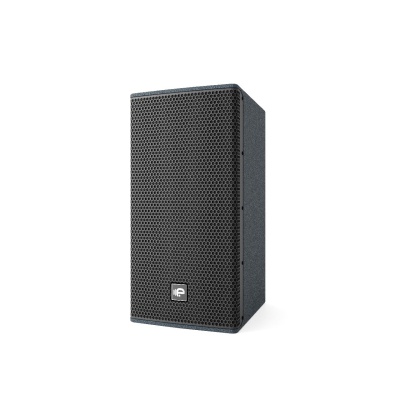
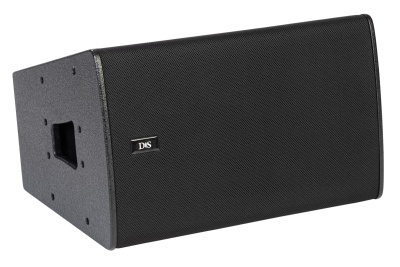
Almost every theater hall has a sound reinforcement system, which consists of a microphone park, a sound engineer's console (sound mixing console), acoustic systems, a signal switching system and audio signal processing and amplification equipment. Perhaps all the components are located in relatively different rooms such as the amp room, technical center and stage. All of the listed components of the audio path are created at the design stage. The sound reinforcement structure of a theater often requires several groups of acoustic systems. Portal loudspeaker systems and additional loudspeakers complete the entire sound reinforcement structure. The selection of these components is approached at the first stage of developing a project for sounding a theater and other institutions where sound reinforcement is required.
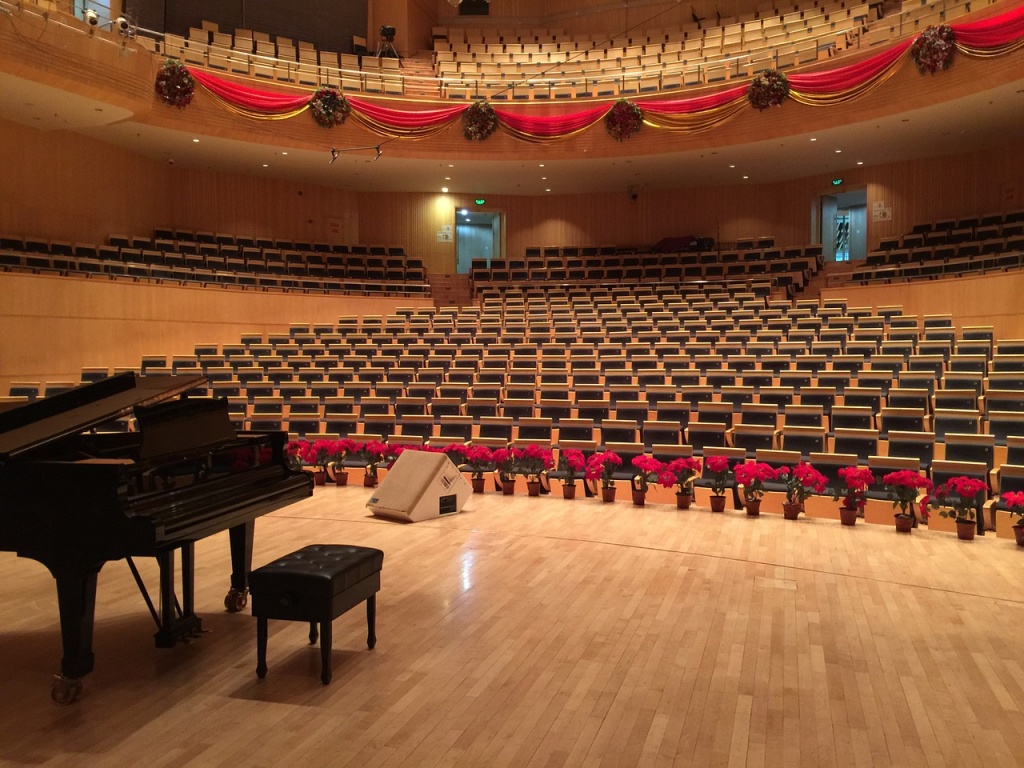
Acustic systems
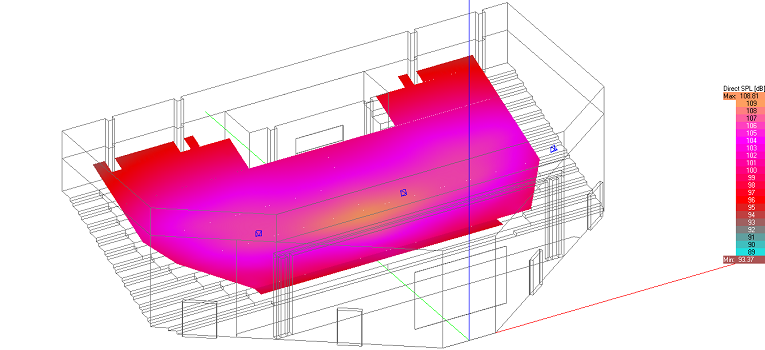
Additional sound systems in the theater.
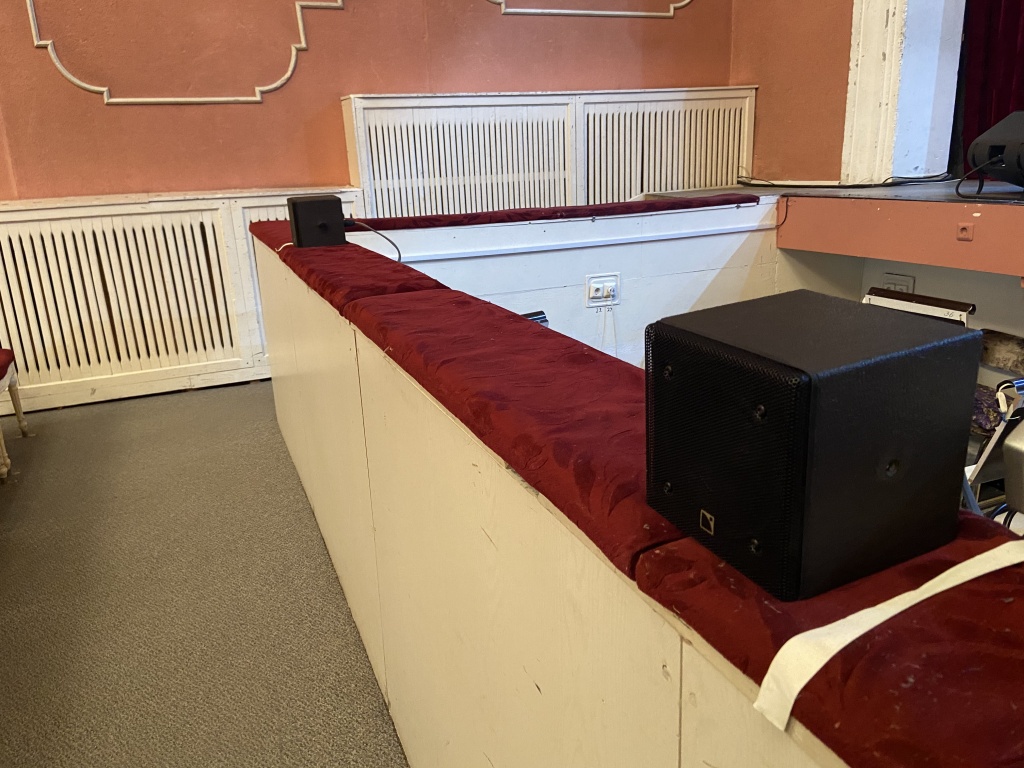
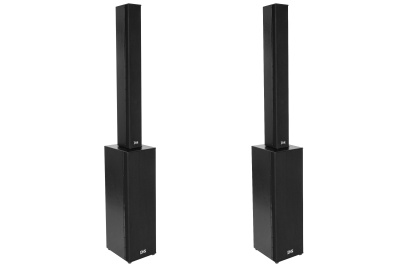
The delay line serves as sound amplification or supports uniform distribution of the sound signal level relative to portal systems, for example on a balcony. The delay line also provides a smoother tonal balance for viewers sitting under the balcony.
The line of sound for the first rows (Front Fill) serves as equalization of the sound level in front of the stage, where portal acoustic systems fall poorly, for example, in the middle of the first or second row. This happens if the acoustic systems do not have a wide enough opening angle of the HF horn. But to solve this problem it is possible to use an additional central channel of the portal system, which is suspended in front of the harlequin.
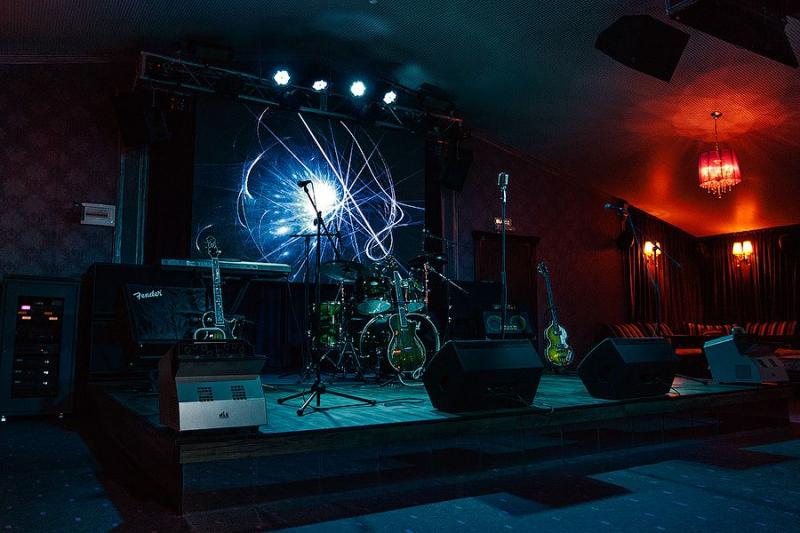
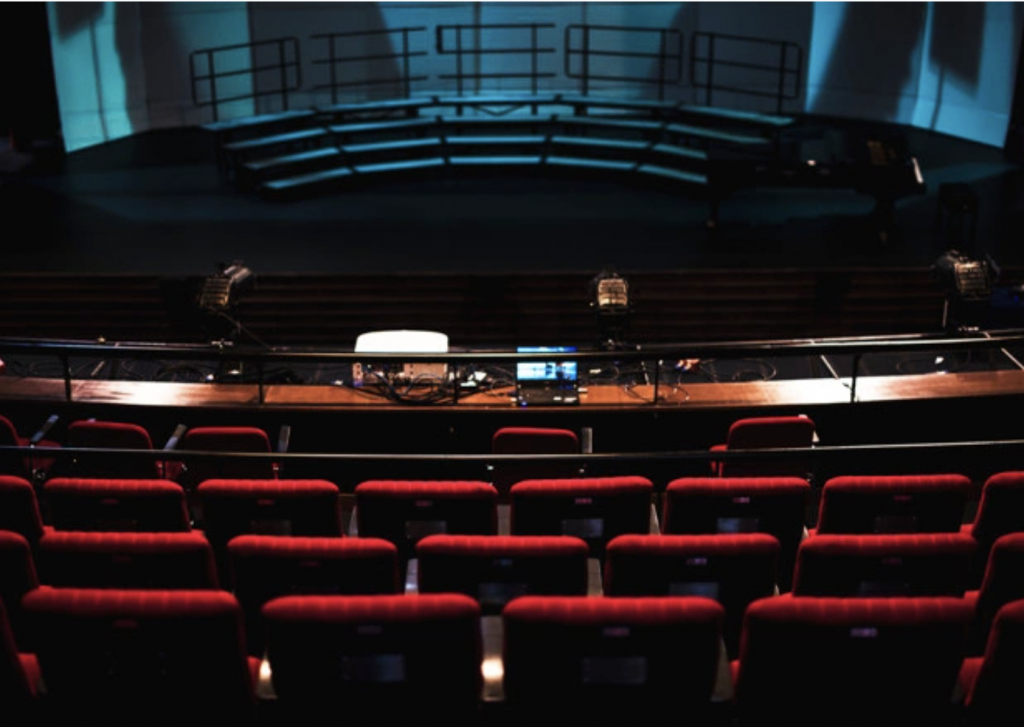
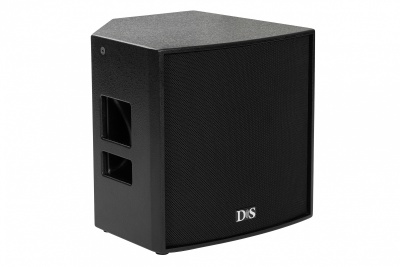
It is very important for the actors to sound the theater stage itself. When performing on stage, they need to hear the soundtrack and feel the rhythm of the music. For this purpose, stage line loudspeakers are installed on the sides of the stage. A completely different mix of signals is supplied to this line, which is selected on the sound engineer’s mixing console.
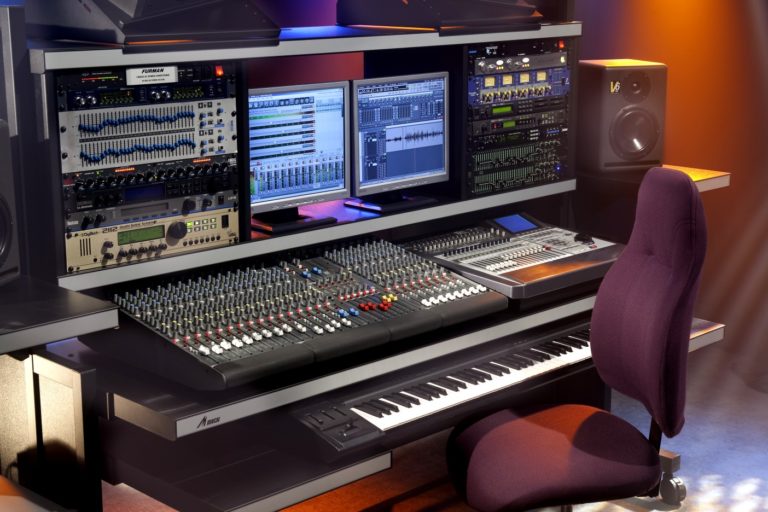
Mixer
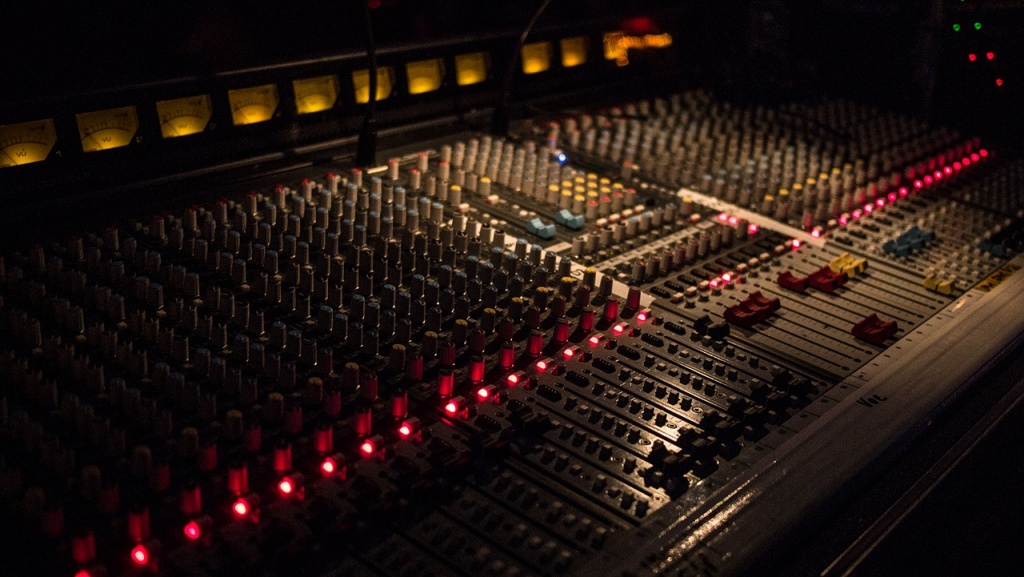
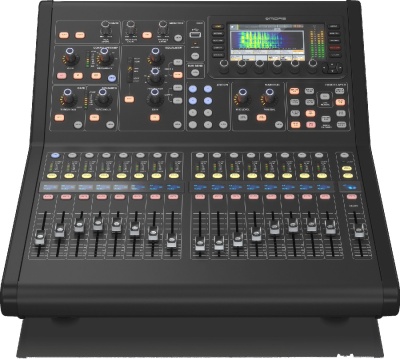
One digital mixing console replaces an entire cabinet of audio processing equipment. The functionality of the remote control is selected from the needs of the sound engineer, in the theater from production tasks and from the equipment complex.
The sound engineer will be able to control the music signal not only in the auditorium, but also, for example, in the foyer with background music.
The structure through which the audio signal passes after the mixing console consists of sound processors and audio power amplifiers. Processors perform the role of distributing the signal to loudspeakers, to different lines of front acoustics, a delay line and others...
In addition to distribution, the sound signal is divided into low, medium and high frequency ranges. Each band is sent to the corresponding speaker component, through the amplifiers.
Audio power amplifiers now often have built-in audio processors, allowing for fewer units. It is advisable to place the amplifiers in a separate room in a rack cabinet, locked and with good ventilation.
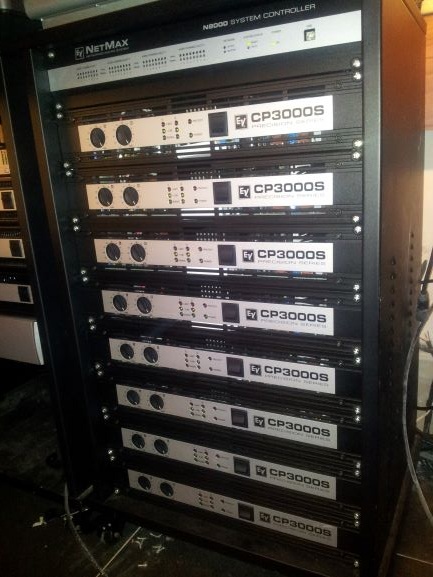
Almost the entire structure of the sound reinforcement system has been described, but the microphone bank remains.
Microphones and radio systems for the theater.
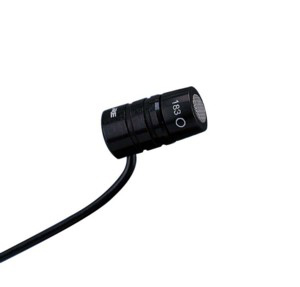
Microphones are the main sources of sound in the theater. The number of input lines of the mixing console depends on the number of microphones. Some are suspended above the stage and mounted on stands, connected via cable; other radio microphones are attached to the actors' costumes, which allows freedom of movement around the stage and auditorium.
All systems are configured and work in a balanced manner after the control system is configured by a specialist. One of the important parts of the setup is sound calibration in the hall, during which a balance of frequency characteristics is built during the interactions between the acoustics of the hall and the sound reinforcement system. After the system is calibrated, the data is stored in the sound processor and can be returned to its original position when the settings are changed.
Фотогалерея


Товары
- Comments