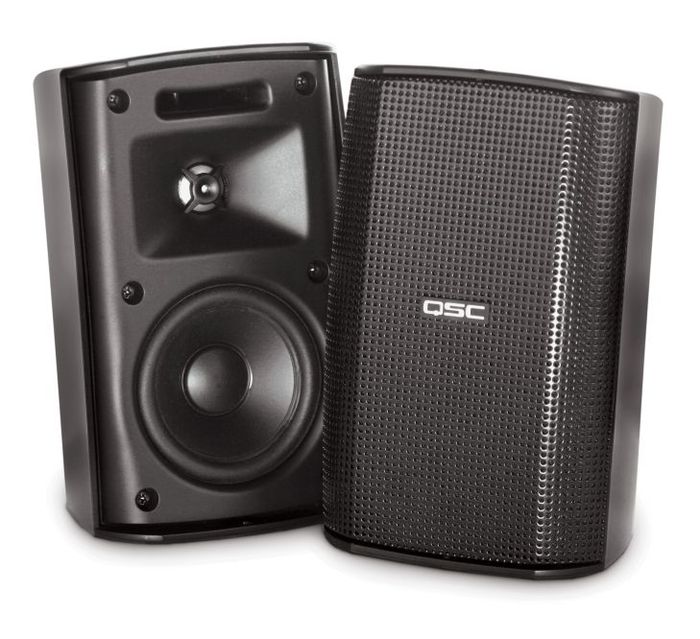
Acoustic calculation, selection of sound equipment for cinema, installation and configuration
|
Оформите заявку на сайте, мы свяжемся с вами в ближайшее время и ответим на все интересующие вопросы.
|
Заказать услугу
|
Professional sound equipment for cinema
The sound that makes you want to come to the cinema
- good, clear audibility in all areas and at each spectator seat;
- high-quality, intelligible, clearly distinguishable sound of the entire sound spectrum of the broadcast.
range, correctly placed allow you to clearly hear and distinguish all the subtleties of a musical composition, noise and sounds. For example, even the whisper of the characters in a broadcast film against a loud background (music that escalates the situation, explosions, thunder, etc.);
absence of any voice distortion, illegibility, crackling, noise, volume changes, etc.;
comfort of perception of the sound palette.
Acustics Delta specialists design the sound of a cinema hall so that any note and sound shade is audible, but sounds harmonious and soft to the ear even at high volume, and does not deafen or cause other uncomfortable sensations.
What does professional cinema sound guarantee?
- hall area;
- features of its architecture and layout;
- number of spectator seats and their location;
- the nature of additional events held in the cinema - concerts, presentations, shows, etc.;
- acoustic features of the room;
- quality of sound insulation and type of materials used in the decoration and design of the cinema hall, etc.
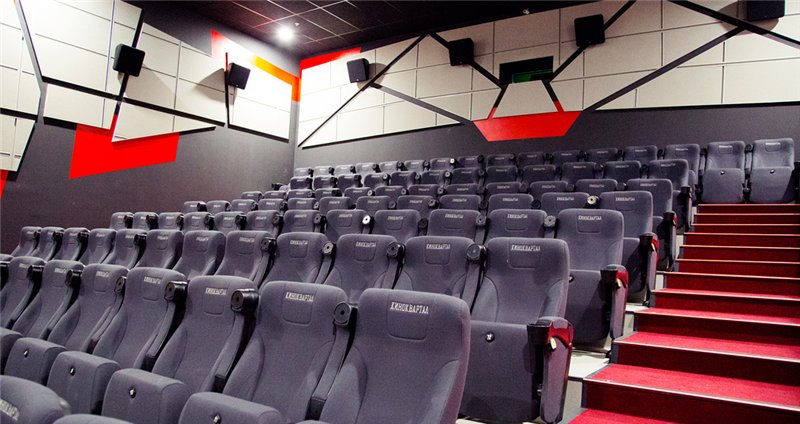
Professional-level sound equipment from our company - a set of cinema acoustics, amplifiers, subwoofers, behind-the-screen speakers, surround sound, etc. - provides:
- high-quality audio accompaniment - powerful, comfortable, voluminous;
- flawless broadcasting – clean, clear, detailed;
- intelligibility of the entire sound spectrum;
- creating a pleasant and realistic three-dimensional sound field;
- a comfortable sound environment for every viewer.
We make it so that you don't want to leave the cinema.
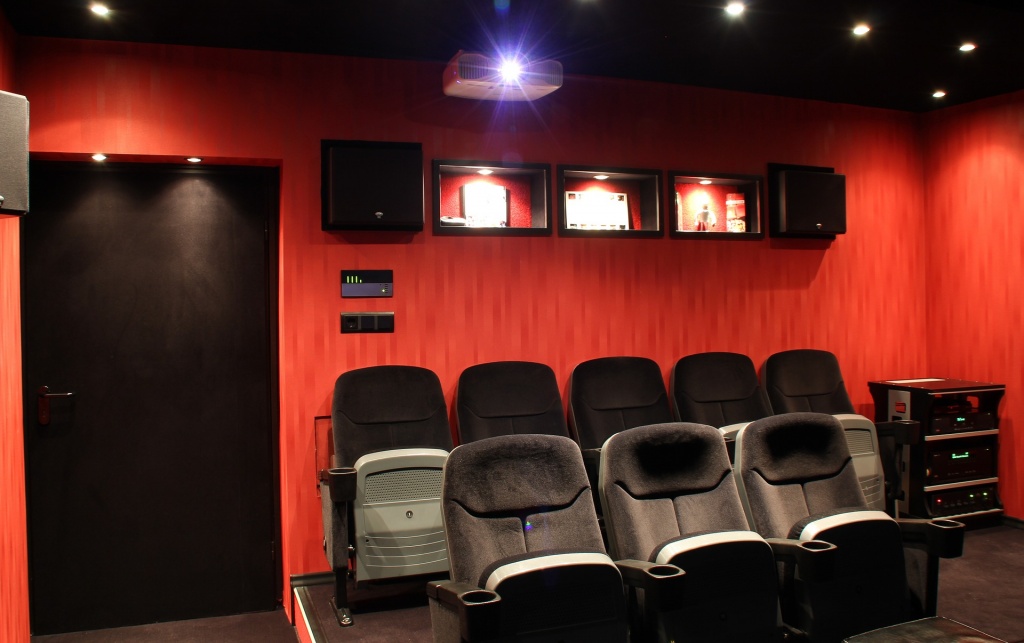
When opening a cinema, you need to remember that the choice of audio equipment is one of the most important stages in building a cinema. We will tell you what you need to run a cinema hall with good and high-quality sound.
First, you need to analyze the room for its acoustic properties; for this you need to invite an acoustics specialist who, using special equipment, will measure the reverberation time in the room and examine it according to its acoustic characteristics. A separate sound reinforcement project is drawn up for each cinema hall. The next stage will be building a model of the cinema hall in the program for acoustic calculations.
In this case, it is desirable to have all the dimensions of the cinema hall; they are necessary to build a 3D model in the EASE 4.3 acoustics calculation program, with the help of which a specialist will be able to select the necessary materials (wall and ceiling decoration) to optimize the reverberation time and position the acoustic systems. Based on the calculation results, the acoustic properties of the room should be improved, only after this it is necessary to follow all recommendations for finishing the cinema hall and install sound-absorbing materials recommended by a specialist.
After calculating the sound absorption of the cinema hall, we proceed to the selection of acoustic systems. For this, we also use the same software (EASE 4.3) to calculate the acoustics of the room. We insert cinema acoustic systems into the model that was created to calculate sound absorption, using various placement options, as well as various models of acoustic systems for the cinema hall, and achieve uniformity of the audio field in the area where the audience is located, and optimal musical pressure. When the result satisfies the requirement, we select musical power amplifiers for the selected speakers according to the parameters of the selected speaker systems.
For a movie theater, there is a standard for loudspeaker placement. There are several groups of acoustic systems:
-
Behind-the-screen acoustics are installed behind the screen and perform the main role of a cinema music system. The complete set of the behind-the-screen music system consists of high-frequency components consisting of a driver with a horn, mid-frequency components are middle musical speakers responsible for speech intelligibility and subwoofers that provide low-frequency frequencies.
-
Surround system - consists of small acoustic systems hung around the perimeter of the audience hall, giving the playback the effect of surroundings and the feeling of being in the center of the event.
-
Public address system – broadcast music system for announcements or for audio fire alarm evacuation signal. This system is connected separately from the rest and takes priority when there is a danger to visitors.
At the moment, technology in the field of audio equipment is advancing along with the times; there are analog and digital devices on the show equipment market. Likewise, there are various types of audio power amplifiers, including analog and digital, the latter are remote-controlled; a sound technician serving a cinema in which digital amplifiers are installed will be able to connect to them using a computer to change the operating status and monitor the amplifiers.
Continuing the chain of the sound amplification path, we connect the selected amplifiers to the music film processor. The processor divides the music signal into several frequency bands: high, mid, low, and also distributes the music signal across acoustic systems for behind-the-screen acoustics and loudspeakers around the hall.
To connect different types of musical equipment, there are different types of switching; they are divided into the same segments:
- Acoustic for connecting speaker systems
- Signal for music processing, sound sources and for connecting the amplifier to the mixing console
- Instrumental for connecting musical instruments and microphones
- Multi-cable (multicore) having many turns combined into one thick cable
But now all this web of wires can be replaced with digital technologies that do not lose the quality of the audio signal. One of the most common digital audio transmission technologies is Dante. Many audio equipment manufacturers are introducing their own digital technologies; they are also the best for this equipment segment.
Continuing the switching section, we move on to the next section - audio equipment installation and configuration. The two sections are closely related because When choosing the type and length of cable, the designer of audio equipment must imagine how the main music switching routes will go. This can be coordinated with other premises engineers for ease of installation.
The installation of speaker systems is carried out according to the calculations that were made earlier, observing the coordinates of the suspension or installation points, as well as the angles of inclination and direction of the loudspeakers. The acoustic cable is pulled before finishing work is completed. Installation work also includes connecting all components of the audio path. Of course, during installation problems arise that must be resolved promptly by engineers and installers.
Everything seems to work and is connected, but there is no sound! This is fixed by the Audio Hardware Customizer. Music equipment is not that easy to get started, for example, getting an audio film processor running requires fine tuning by a professional engineer who knows how to set it up. Next, the audio signal is configured, frequencies are optimized for the room for excellent sound.
For advice on choosing acoustic systems, as well as improving the acoustics of the cinema hall, please contact us! Send all materials (dimensions, drawings) and technical specifications to info@acoustics.si or contact us by phone: +386 6 966 5245- Acustics Delta
Our proposals for designing a cinema hall:
-
Acoustically analysis of the room;
-
Improving the acoustics of the hall;
-
Development and selection of sound and lighting equipment;
-
Drawing up estimates;
-
Supply of show equipment;
-
Installation and commissioning.